11
Explore the twenty-two channels of the Tree of Life mapped across the human form. The silhouette now follows natural body proportions, while every Sephirah is aligned to its corresponding body centre and the cards remain around the outside.
The ten Sephiroth form the central Tree. Compact channel labels are placed between the spheres, while the drawn cards remain around the outer map for a clear and readable spread.
Tree of Life Tarot combines the ten Sephiroth with twenty-two connecting channels and twenty-two drawn Tarot cards. The central Tree represents a movement from the highest level of awareness through mind, feeling, balance, desire, structure and foundation into lived experience. Each card is placed around the map and linked to one channel so the reading can be explored as a complete network rather than as a straight line of separate cards.
Enter one clear question about your spiritual path, life direction, personal purpose, a difficult transition, relationship patterns, inner balance or a recurring theme you want to understand more deeply.
You can also leave the question open for a broader Tree of Life reading. The twenty-two channels will then be read together as one complete map.
Begin with the ten Sephiroth in the center, then look at the paths that connect them. The Tarot cards around the perimeter correspond to the twenty-two channels.
The strongest interpretation comes from seeing how several channels, spheres and cards repeat or develop the same theme across different parts of the Tree.
Kether is the crown of the Tree and the highest point of the map. It represents origin, pure awareness, the first impulse and the level from which the rest of the Tree unfolds.
Chokmah represents raw wisdom, creative force, revelation and expansion. It can show the first strong movement of an idea before it has been fully shaped or structured.
Binah gives form to what Chokmah releases. It is connected with understanding, receptivity, boundaries, structure and the ability to contain or organize experience.
Chesed represents generosity, support, growth, trust and the capacity to expand. It can show where openness, confidence or benevolence is helping the path develop.
Geburah represents limits, discipline, courage, correction and necessary boundaries. It shows where strength may require saying no, cutting away excess or acting with greater precision.
Tiphareth sits near the center of the Tree and brings opposing forces into balance. It is connected with harmony, integration, identity, purpose and the ability to see the larger pattern clearly.
Netzach reflects emotion, desire, attraction, creativity, instinct and the force that keeps something moving because it matters to you.
Hod represents thought, language, analysis, planning and interpretation. It shows how the mind organizes experience and how ideas are communicated or turned into workable form.
Yesod is the foundation beneath visible action. It is associated with memory, imagination, dreams, patterns, emotional residue and the inner structures that shape what eventually becomes real.
Malkuth is the grounded end of the Tree. It represents lived experience, the physical world, practical results and what finally becomes visible through action and choice.
The twenty-two lines between the Sephiroth show movement between different levels of the Tree. Each channel connects two spheres and describes the transition between those two qualities.
A Tarot card is drawn for every channel, so each path becomes a specific part of your reading rather than only a line on the diagram.
Tap or click any Tarot card around the map to open its information. The details panel shows the path number, connected channel, traditional correspondence, path meaning and the card drawn for that position.
Tap the same card again or use the close button to return to the full map.
The Tree is organized around three vertical pillars. The Pillar of Severity emphasizes structure, limits and discernment. The Pillar of Mercy emphasizes expansion, generosity and flow. The Middle Pillar represents balance, integration and the movement between higher awareness and grounded life.
The map also marks four levels: Atziluth — World of Archetypes, Briah — World of Creation, Yetzirah — World of Formation and Assiah — World of Action.
These levels help show how a theme can move from an originating idea through development and formation into practical expression.
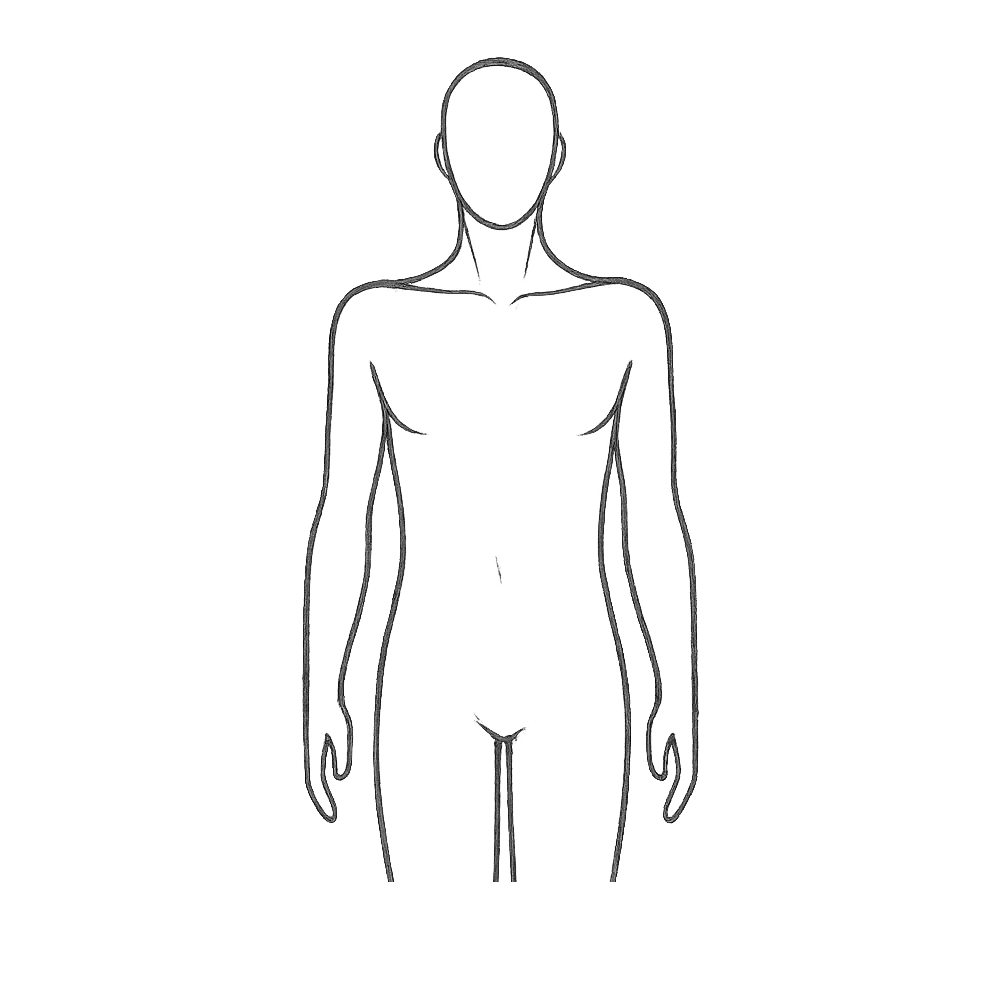
The central human silhouette helps place the Sephiroth along a vertical body axis, from crown to grounded base. This makes it easier to see the Tree as a descending and ascending structure rather than only a geometric diagram.
The body image is a visual guide for the map and helps you follow how different levels of the Tree relate to one another.
Upright cards often show energy that is easier to recognize or express. Reversed cards can show delay, resistance, internalization, imbalance or a channel that is being experienced in a more difficult or indirect way.
A reversed card is not automatically negative. Its meaning depends on the path it occupies and the Sephiroth it connects.
Look for repeated suits, repeated numbers, Major Arcana patterns and several cards that point toward the same issue. When a similar message appears on different channels, it can show that one theme is moving through several levels of the Tree.
Repetition across the map is often more important than one dramatic card.
Use the zoom controls to inspect the Tree more closely. On desktop, zoom in and drag the map. On mobile, use two fingers to zoom and move while one finger continues to scroll the page.
Use Reset view whenever you want to return to the full centered Tree.
One useful approach is to begin at Kether and move downward through the Tree toward Malkuth. This shows how an idea, pattern or inner process may descend from awareness into practical life.
You can also reverse the process and read upward from Malkuth when you want to understand how a real-life situation connects with deeper causes, values or intentions.
First look at the full Tree before opening individual channel details. Notice which areas feel visually active, where Major Arcana appear and whether the same suit or theme repeats across several cards. Then inspect the channels one by one and compare each card with the two Sephiroth it connects.
After reading the complete interpretation, return to the channels that repeat the strongest themes. Follow those themes through the Tree and ask where they begin, how they change through the middle of the map and what they become near Malkuth. This helps turn a complex twenty-two-card reading into one clear and connected picture.