
ZEN THE GATEWAY
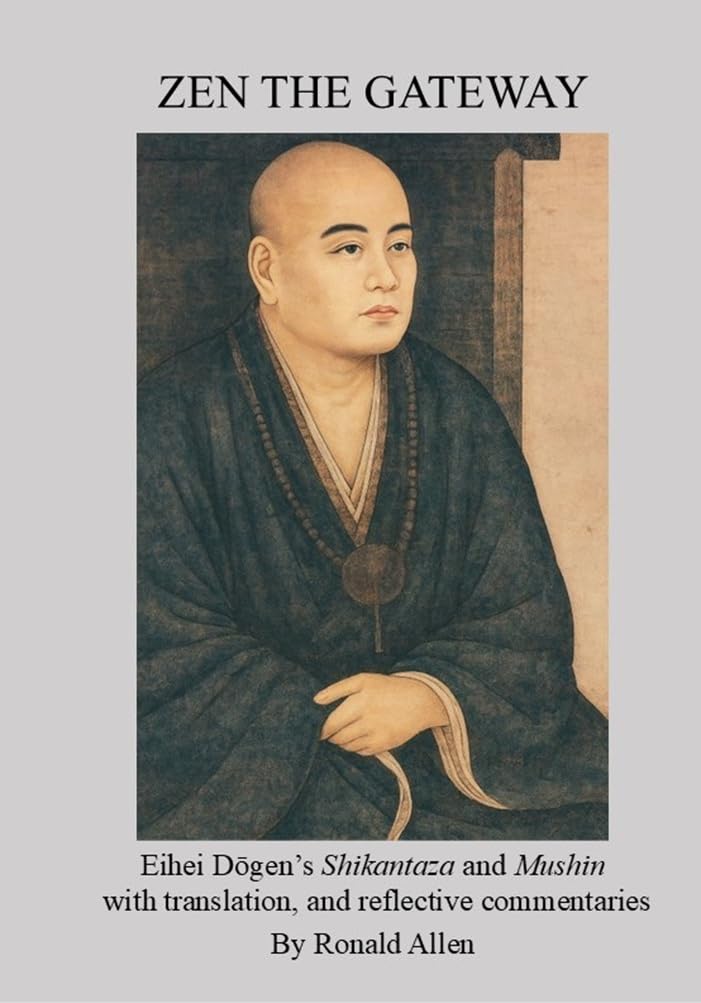
This book explores Zen in its deepest and broadest expressions. It begins with the concept of no-mind, or Mushin, a state of awareness free from clinging thoughts, and contrasts this with Shikantaza, or “just sitting.” Early chapters ground Zen in the Eightfold Path, showing how it inherits and transforms this foundation into a living practice. Readers encounter early Chan and Zen writings and see how meditation embodies the Eightfold Way through presence rather than doctrine. The book moves from beginner perspectives into deeper practice, ending with reflections that connect ancient teachings to modern life. Meditation is traced from early Zen lineages to current adaptations, showing Zen as alive not only in monasteries but also in classrooms, workplaces, and daily routines. The zendo is described provocatively as “the place of murderers, cutthroats, and thieves,” challenging notions of purity and reminding us Zen is for everyone. Anecdotes from Ryokan highlight Zen’s humor and humanity, while texts like Kapleau’s The Three Pillars of Zen are acknowledged as gateways for Western practitioners. Central attention is given to Eihei Dōgen’s Shikantaza, presented through translations into Japanese, Tagalog, and Malay to emphasize universality. Shikantaza is shown as more than a method—an orientation to radical presence without technique or goal. Variations of “just sitting” are described as wholehearted being, orientation to presence, and illumination of Dōgen’s vision. Historical and doctrinal studies trace how refuge evolved from Chan monasteries in China through Japan and into American Zen centers. Comparisons are drawn between Zen teacher-student dynamics and Vajrayana guru-disciple relationships, highlighting both continuity and divergence. Zen is further placed in dialogue with Buddhist yoga, Hindu yoga, and Tibetan Vajrayana. Lama Tarthang Tulku’s teaching of “Skillful Means” yoga exemplifies Tibetan approaches that resonate with Zen, allowing readers to see similarities and distinctions. Cosmology is explored through the Asura realm, associated with jealousy and struggle. From Indian sources to Japanese contexts, the Asura archetype appears in warrior culture, yakuza mythology, and modern media. This figure becomes a mirror for practitioners, reflecting aggression and conflict to be transformed through practice. The cultural and political dimensions of Zen are also examined. The samurai ethos, its link with Zen discipline, and its later transformation into yakuza myth are presented as archetypes adapting across history. Chanting practices are explored in the Sōtō Zen tradition. The Heart Sūtra, Great Compassion Dharani, and lineage chants are presented as cosmological as well as ritual practices, carrying wisdom through sound and rhythm. Their role is further contextualized within Shinbutsu-shūgō, the blending of Shinto and Buddhism in Japan. Throughout, study is balanced with reflection. Each section closes with summaries linking scholarship to the lived experience of Zen. Readers are invited to approach Zen not as distant history but as an evolving way of being. In conclusion, this work is both resource and companion, weaving sutras, Dōgen’s writings, translations, and modern echoes into one path of exploration. It guides the reader from Mushin to Shikantaza, from Chan monasteries to American roads, from Asuras to chanting halls. It is for those who seek Zen as philosophy, practice, and tradition—or who simply wish to sit, breathe, and meet reality directly. The author’s reflections are interwoven throughout, ensuring the text is not just presentation but dialogue. Rather than answers, it points to the experience of presence at the heart of Zen.
VoxFati participates in various affiliate programs. When you click on links to different merchants on this site and take certain actions, such as making a purchase or signing up for a service, it may result in us earning a commission.




Comments
Comments appear after approval.
Log in to comment