
What Is Shamanism?: From Himiko to DMT and the Neuroscience of Trance

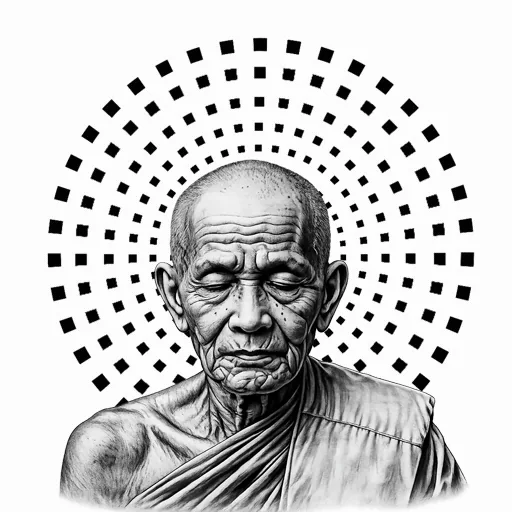
What is shamanism—and why have human beings, across different cultures and eras, repeatedly claimed to hear the voices of gods, spirits, ancestors, and the dead?
This book explores shamanism from ancient history to modern neuroscience.
Beginning with Siberia, the homeland of the word “shaman,” it travels through the Oracle of Delphi, Queen Himiko of ancient Japan, miko, Okinawan yuta, the itako of Mount Osore, Amazonian shamans, ayahuasca, psychoactive plants, trance, possession, healing, and the rise of new religions.
It also asks a more difficult question:
What actually happens in the human mind when a person says, “A god descended into me,” or “A spirit spoke through me”?
Modern psychology and neuroscience offer important clues. Altered states of consciousness, dissociation, expectation, rhythm, fasting, prayer, psychoactive substances, and unconscious processes can all influence human experience.
But explanation does not automatically erase mystery.
To describe brain activity is not the same as answering what a powerful spiritual experience means to the person who had it—or to the community that believed in it.
This book neither declares that shamans truly communicate with spirits nor dismisses every such experience as hallucination.
Instead, it examines shamanism through history, religion, anthropology, psychology, and neuroscience, while leaving room for what remains unknown.
From Himiko to DMT and the neuroscience of trance, this is ultimately not only a book about shamans.
It is a book about one of humanity’s oldest questions:
Whose voice are we hearing when a voice seems to come from beyond ourselves?
VoxFati participates in various affiliate programs. When you click on links to different merchants on this site and take certain actions, such as making a purchase or signing up for a service, it may result in us earning a commission.


Comments
Comments appear after approval.
Log in to comment