
The Tibetan Pattern Book of Proportions: A Modern English Study Guide to Buddhist Iconometry, Sacred Geometry, and Traditional Thangka Drawing

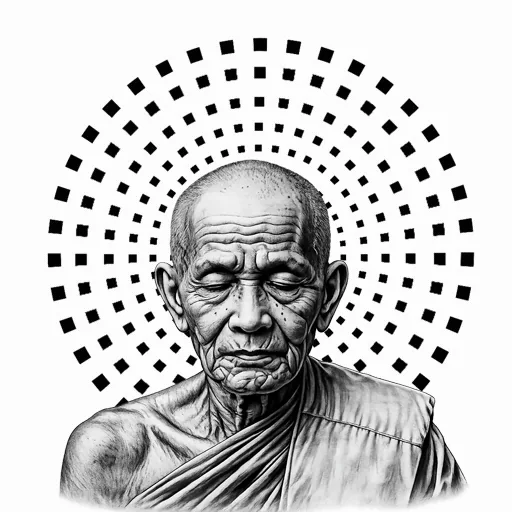
Discover the geometry, discipline, and sacred visual language behind traditional Tibetan and Himalayan Buddhist art with The Tibetan Pattern Book of Proportions: A Modern English Study Edition.
Based on an extraordinary eighteenth-century manuscript preserved by the Getty Research Institute in Los Angeles, this large-format illustrated volume explores the proportional systems used by artists to construct Buddhas, bodhisattvas, teachers, peaceful and wrathful deities, multi-armed figures, clouds, garments, halos, lotus seats, and decorative motifs.
The original manuscript was apparently produced in Nepal for use in Tibet. Its combination of Newari writing and Tibetan numerals reflects the exchange of artistic knowledge between Newar and Tibetan workshops. More than a collection of historic drawings, it is a record of how sacred images were planned through grids, central axes, measured intervals, diagonals, circles, and carefully controlled relationships.
This modern English edition transforms the manuscript into an accessible study guide. Each composition is accompanied by clear explanations of its visible structure and practical observations on how the figure may be reconstructed. Readers learn how to establish the main axis, position the head and body masses, organize limbs and gestures, construct halos and lotus bases, and preserve proportion when enlarging or reducing a design.
In Tibetan and Himalayan Buddhist art, proportion is not merely decorative. Different categories of sacred figures follow distinct bodily structures and iconographic conventions. Iconometric systems helped artists preserve clarity, balance, hierarchy, and continuity across generations of painters and workshops.
The book also highlights a fascinating methodological parallel with Leonardo da Vinci’s proportional studies. Both traditions use geometry, repeated units, and measured relationships to organize the human figure. The comparison is one of artistic method rather than direct historical connection: Leonardo worked through anatomy, mathematics, and the European classical tradition, while Tibetan and Newar artists used iconometry to preserve sacred forms according to Buddhist conventions.
Inside you will find:
• Historical background on the manuscript and its artistic context
• An introduction to Tibetan and Himalayan Buddhist iconometry
• Explanations of grids, modules, axes, diagonals, and proportional measurement
• Step-by-step observations for seated, standing, peaceful, wrathful, dancing, and multi-armed figures
• Studies of facial proportions, gestures, garments, ornaments, clouds, and landscape forms
• A dedicated appendix reproducing the supplied historical manuscript images
• Credits, acknowledgments, and selected references
Especially recommended for thangka painters, Buddhist art students, illustrators, tattoo and ornamental designers, art historians, researchers, and anyone interested in sacred geometry, historical drawing systems, and the relationship between proportion, symbolism, and artistic discipline.
This publication is an independent modern educational reconstruction. It does not claim to reproduce a lost verbal commentary or provide a definitive translation of every historical annotation. It is intended for study, artistic reference, and a deeper appreciation of one of the great proportional traditions of Buddhist art.
VoxFati participates in various affiliate programs. When you click on links to different merchants on this site and take certain actions, such as making a purchase or signing up for a service, it may result in us earning a commission.


Comments
Comments appear after approval.
Log in to comment