Community
Reiki
Reiki Symbols Explained
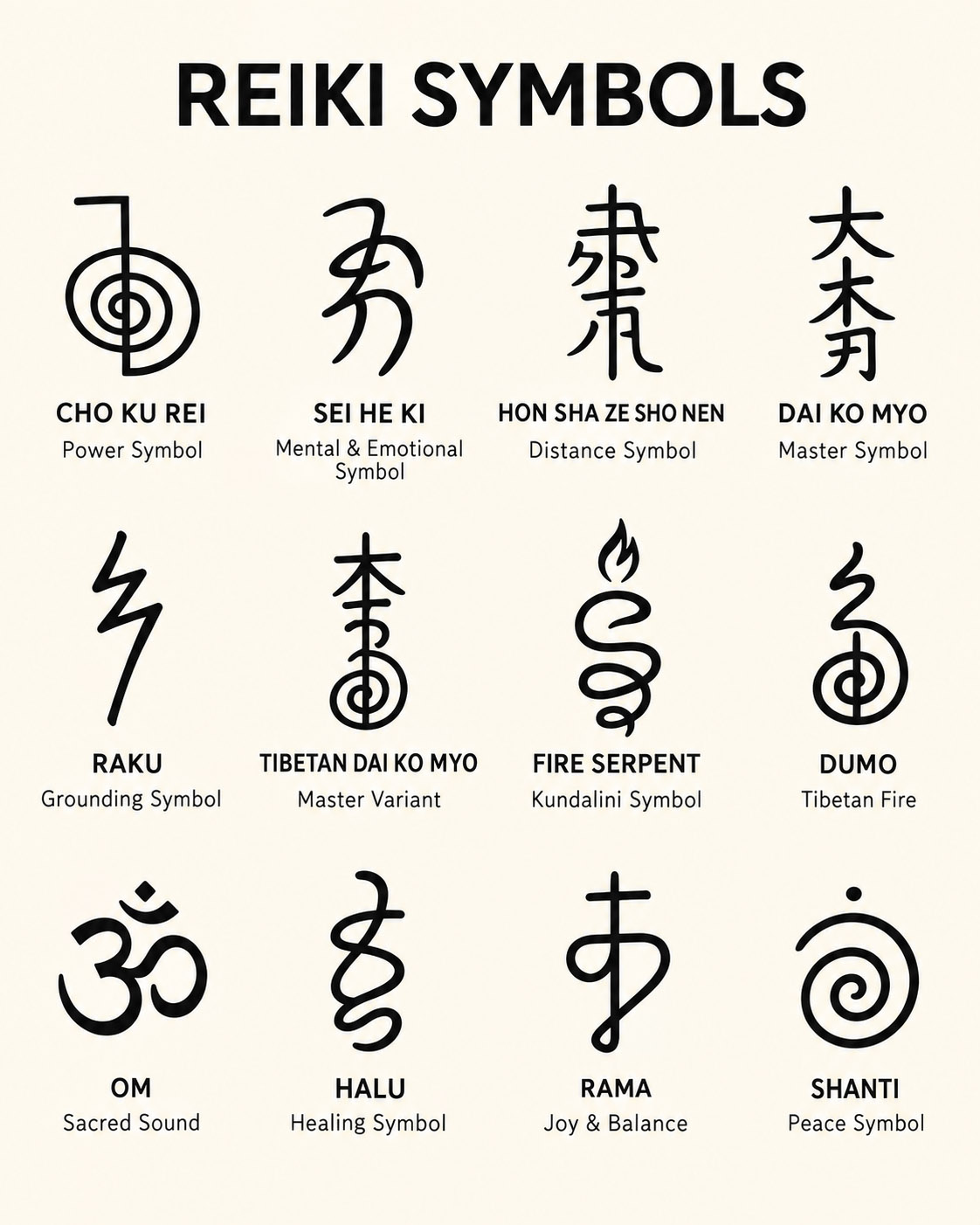
Reiki symbols can look mysterious at first, but their purpose is actually quite simple: they are used to focus intention during Reiki practice. Some are connected with energy, some with emotions, some with distance work, grounding or deeper meditation.
Reiki itself developed in Japan in the early twentieth century and is most closely associated with Mikao Usui. His system was not based only on symbols. It also included meditation, spiritual discipline, hands-on practice and principles for everyday life. As Reiki later spread through teachers such as Chujiro Hayashi and Hawayo Takata, different schools began to develop, and new symbols were added over time.
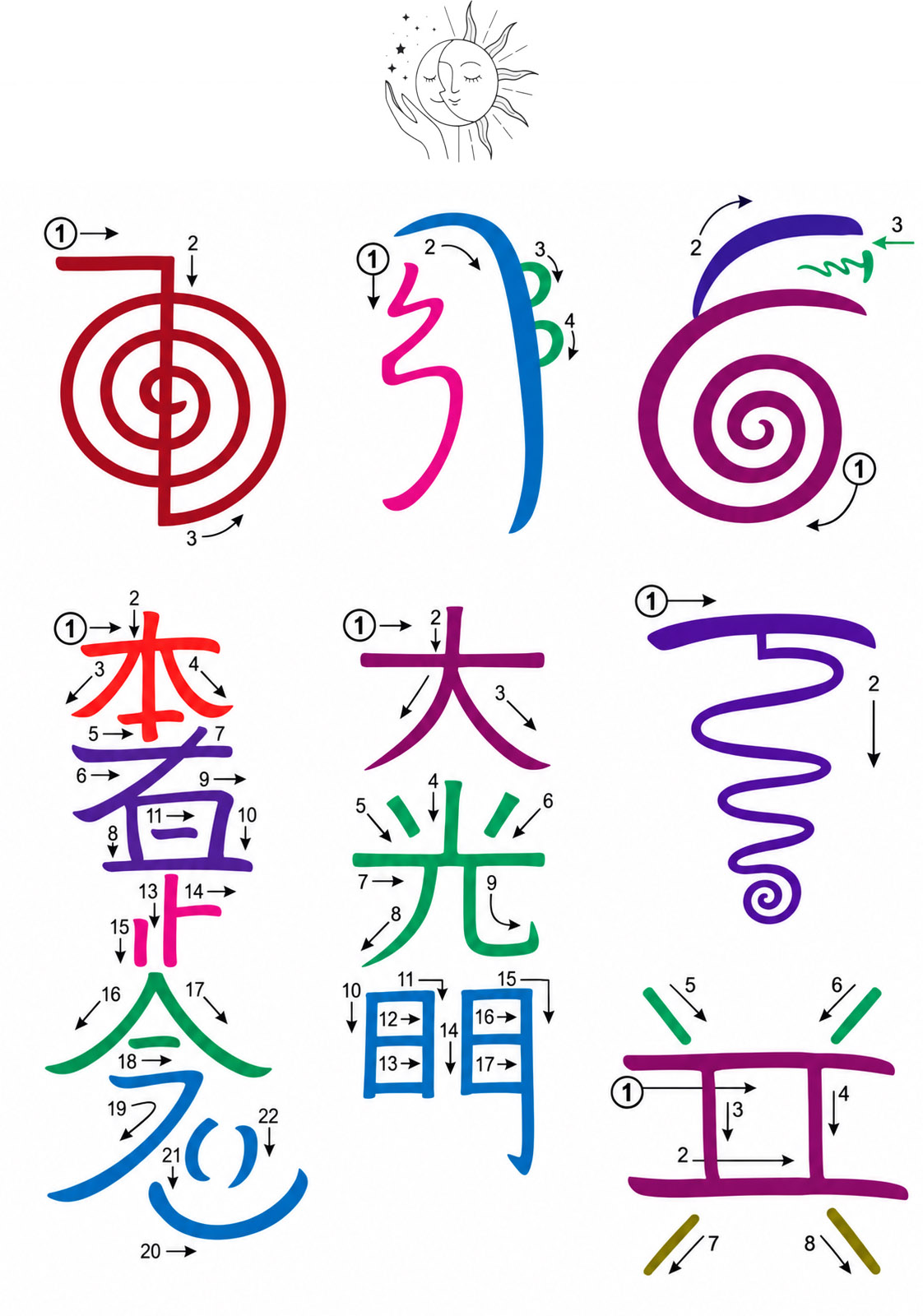
The four symbols most commonly linked with the Usui Reiki tradition are Cho Ku Rei, Sei He Ki, Hon Sha Ze Sho Nen and Dai Ko Myo.
Cho Ku Rei is usually called the Power Symbol. It is used to focus or strengthen intention. A practitioner may visualize it at the beginning of a session, over a particular area of the body, or when preparing a room for Reiki practice.
Sei He Ki is connected with emotional and mental balance. It is often used when someone feels stressed, emotionally overwhelmed or caught in repetitive thoughts. For example, a person may meditate with the symbol after a difficult conversation to help settle emotions and regain perspective.
Hon Sha Ze Sho Nen is known as the Distance Symbol. It is used in Reiki sessions when the practitioner and receiver are not in the same place. Some practitioners also use it when reflecting on past experiences and the effect those memories still have in the present.
Dai Ko Myo is the Master Symbol. It is usually introduced at a more advanced level of Reiki training and is associated with spiritual development, transformation and deeper practice.
Later Reiki systems introduced other symbols.
Raku is commonly linked with grounding and is often used at the end of a session. It can help create a clear sense of closure and bring attention back to the body and present moment.
Tibetan Dai Ko Myo, Fire Serpent and Dumo are connected with Tibetan-influenced Reiki systems. They are generally used in more advanced practices, attunements and meditation, especially where the focus is on transformation, energy flow and spiritual development.
Om is different because it did not originate in Reiki. It comes from ancient Indian spiritual traditions and was later adopted by some Reiki practitioners for meditation and sacred sound practice.
Halu and Rama are usually associated with Karuna Reiki. Halu is often connected with deeper emotional patterns and personal healing, while Rama is linked with grounding, balance and bringing spiritual practice into everyday life.
Shanti is associated with peace and calm. It may be used during meditation, before sleep or when someone wants to create a quieter mental state.
In practice, Reiki symbols can be used in several ways. Some people draw them in the air with a finger, some visualize them mentally, and others repeat their names silently. The method depends on the Reiki tradition and teacher.
A simple session might begin with Cho Ku Rei to create focus, continue with Sei He Ki for emotional balance, use Shanti for calm, and finish with Raku for grounding.
One important point is that not every Reiki symbol seen online belongs to the original Usui system. Modern charts often mix symbols from Japanese Reiki, Tibetan Reiki, Karuna Reiki and older Indian spiritual traditions.
That does not make the later symbols meaningless, but knowing their background helps to understand them properly.
Reiki symbols are best viewed as a symbolic language. Each one gives the practitioner a different focus: power, emotion, distance, mastery, grounding, transformation or peace. Their value comes not only from the drawing itself, but from the intention and practice connected with it.
Reiki itself developed in Japan in the early twentieth century and is most closely associated with Mikao Usui. His system was not based only on symbols. It also included meditation, spiritual discipline, hands-on practice and principles for everyday life. As Reiki later spread through teachers such as Chujiro Hayashi and Hawayo Takata, different schools began to develop, and new symbols were added over time.
The four symbols most commonly linked with the Usui Reiki tradition are Cho Ku Rei, Sei He Ki, Hon Sha Ze Sho Nen and Dai Ko Myo.
Cho Ku Rei is usually called the Power Symbol. It is used to focus or strengthen intention. A practitioner may visualize it at the beginning of a session, over a particular area of the body, or when preparing a room for Reiki practice.
Sei He Ki is connected with emotional and mental balance. It is often used when someone feels stressed, emotionally overwhelmed or caught in repetitive thoughts. For example, a person may meditate with the symbol after a difficult conversation to help settle emotions and regain perspective.
Hon Sha Ze Sho Nen is known as the Distance Symbol. It is used in Reiki sessions when the practitioner and receiver are not in the same place. Some practitioners also use it when reflecting on past experiences and the effect those memories still have in the present.
Dai Ko Myo is the Master Symbol. It is usually introduced at a more advanced level of Reiki training and is associated with spiritual development, transformation and deeper practice.
Later Reiki systems introduced other symbols.
Raku is commonly linked with grounding and is often used at the end of a session. It can help create a clear sense of closure and bring attention back to the body and present moment.
Tibetan Dai Ko Myo, Fire Serpent and Dumo are connected with Tibetan-influenced Reiki systems. They are generally used in more advanced practices, attunements and meditation, especially where the focus is on transformation, energy flow and spiritual development.
Om is different because it did not originate in Reiki. It comes from ancient Indian spiritual traditions and was later adopted by some Reiki practitioners for meditation and sacred sound practice.
Halu and Rama are usually associated with Karuna Reiki. Halu is often connected with deeper emotional patterns and personal healing, while Rama is linked with grounding, balance and bringing spiritual practice into everyday life.
Shanti is associated with peace and calm. It may be used during meditation, before sleep or when someone wants to create a quieter mental state.
In practice, Reiki symbols can be used in several ways. Some people draw them in the air with a finger, some visualize them mentally, and others repeat their names silently. The method depends on the Reiki tradition and teacher.
A simple session might begin with Cho Ku Rei to create focus, continue with Sei He Ki for emotional balance, use Shanti for calm, and finish with Raku for grounding.
One important point is that not every Reiki symbol seen online belongs to the original Usui system. Modern charts often mix symbols from Japanese Reiki, Tibetan Reiki, Karuna Reiki and older Indian spiritual traditions.
That does not make the later symbols meaningless, but knowing their background helps to understand them properly.
Reiki symbols are best viewed as a symbolic language. Each one gives the practitioner a different focus: power, emotion, distance, mastery, grounding, transformation or peace. Their value comes not only from the drawing itself, but from the intention and practice connected with it.


Comments
Comments appear after approval.
Log in to comment